
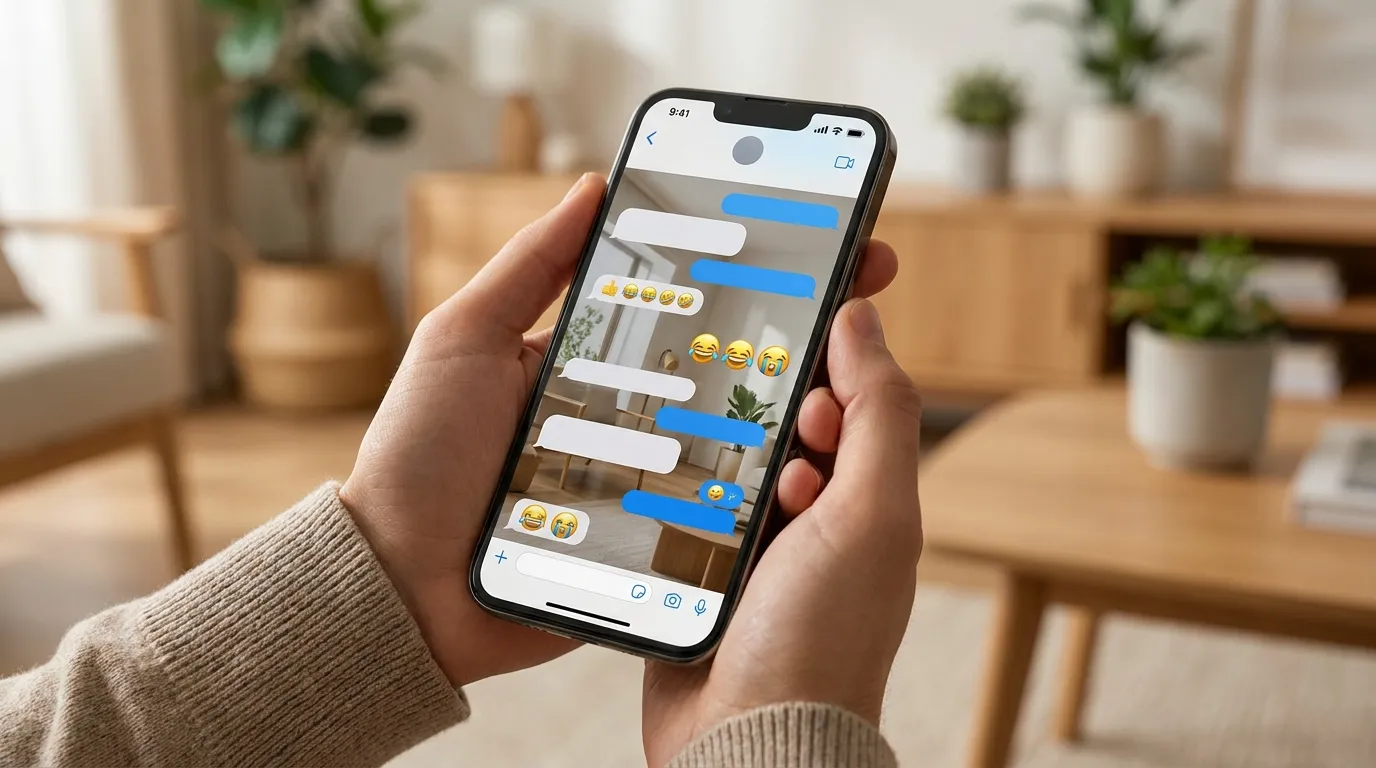
A dry emoji is usually an emoji used in a short, flat, uninterested, awkward, or low-energy reply. There is no single official emoji called the “dry emoji.” Instead, people use different emojis, such as 😐, 😑, 👍, or 🙂, to make a message feel intentionally brief or emotionally distant.
The meaning depends heavily on the conversation. The same emoji can sound neutral in one chat and sarcastic or annoyed in another.
In texting, a “dry” emoji is less about the emoji itself and more about the tone it creates.
What Does “Dry Emoji” Mean?
When people search for dry emoji, they are often looking for an emoji that can express a dry response, boredom, awkwardness, indifference, or a lack of enthusiasm.
For example:
- “Okay 👍”
- “Sure 🙂”
- “Oh 😐”
- “Cool 😑”
- “Nice 👍”
- “Haha 🙂”
These replies are not necessarily rude. Their tone comes from the combination of the words, emoji, punctuation, and previous messages.
A message like “Thanks 🙂” can be friendly. But after someone sends a long, emotional message, replying with “Okay 🙂” may feel dismissive or unusually cold.
That is why there is no universal “dry emoji.” People choose emojis based on the feeling they want to communicate.
Best Emojis for a Dry Reply
If you want an emoji that can make a text feel short, neutral, awkward, or emotionally flat, some choices are more common than others.
| Emoji | Common dry-text feeling | Example |
| 😐 | Neutral, unimpressed, awkward | “Okay 😐” |
| 😑 | Unamused or tired | “Sure 😑” |
| 🙂 | Polite but sometimes distant | “Alright 🙂” |
| 👍 | Brief acknowledgment | “Got it 👍” |
| 😶 | Speechless or quiet | “Oh 😶” |
| 🙃 | Awkward or lightly sarcastic | “Great 🙃” |
| 😬 | Awkward or uncomfortable | “Yeah 😬” |
| 😒 | Annoyed or unimpressed | “Okay 😒” |
| 🫠 | Overwhelmed or awkward | “I can’t believe that 🫠” |
| 💀 | “I’m dead” or exaggerated reaction | “You actually said that 💀” |
The important difference is that some of these emojis are naturally neutral, while others add sarcasm, annoyance, awkwardness, or humor.
😐 The Classic Neutral or Dry Emoji
The 😐 neutral face is one of the easiest emojis to use when you want a message to sound emotionally flat.
It can communicate:
- “I don’t know what to say.”
- “Okay.”
- “I’m not impressed.”
- “That’s awkward.”
- “I’m just going to stay quiet.”
For example:
Person A: “I forgot your birthday again.”
Person B: “😐”
Here, the emoji may communicate disappointment without directly saying it.
But 😐 does not always mean something negative. It can simply represent a neutral reaction when someone has no strong emotional response.
😑 Can Mean “I’m Not Impressed”
The 😑 unamused face is stronger than 😐.
It can suggest:
- Irritation
- Boredom
- Disbelief
- Lack of enthusiasm
- “Seriously?”
- “Here we go again.”
Example:
“You did the same thing again 😑”
This does not feel like a friendly, excited response. It gives the message a tired or unimpressed tone.
If someone sends only 😑, they may be communicating more emotion than a simple “okay.”
🙂 Why the Slightly Smiling Face Can Feel Dry
The 🙂 slightly smiling face is interesting because it looks friendly, but its meaning can change dramatically depending on context.
On its own:
“🙂”
may simply mean a small, polite smile.
But:
“Okay, no problem 🙂”
can sometimes sound cold or passive-aggressive, especially when the conversation is already tense.
For example:
Person A: “I’m going to cancel our plans again.”
Person B: “That’s fine 🙂”
The smile may suggest that everything is not actually fine.
This is why context matters more than the emoji’s basic dictionary meaning.
👍 The Thumbs-Up Can Be a Very Dry Reply
The 👍 thumbs-up is one of the shortest ways to acknowledge a message.
It can mean:
- Okay
- Got it
- Agreed
- Sounds good
- Understood
- Message received
But when someone expects a longer response, a single 👍 can feel extremely dry.
For example:
Person A: “I spent three hours explaining everything to you.”
Person B: “👍”
That response could easily be interpreted as dismissive.
On the other hand, if someone says:
“I’ll send the file tonight.”
A simple:
“👍”
is perfectly normal.
So the emoji is not inherently dry. The situation determines how it feels.
😶 When Silence Is the Message
The 😶 face without mouth can communicate silence, awkwardness, or having nothing to say.
It works well when someone says something unexpected and you don’t know how to respond.
Example:
“I accidentally sent the message to the wrong person 😶”
Here, the emoji can express awkward silence.
A single 😶 can also feel like a deliberately dry response when you want to avoid saying more.
🙃 for a Dry or Sarcastic Reaction
The 🙃 upside-down face is often useful when a situation is awkward, ridiculous, or mildly frustrating.
It can communicate:
- “Well, this is great.”
- “Everything is going perfectly… obviously.”
- Awkward humor
- Light sarcasm
- Frustration disguised as a smile
Example:
“My internet stopped working five minutes before the meeting 🙃”
This is not exactly a dry emoji in every situation, but it can create a deliberately understated reaction.
😬 When the Conversation Gets Awkward
The 😬 grimacing face is useful when you want to show discomfort or awkwardness.
For example:
“I accidentally called my teacher ‘Mom’ 😬”
The emoji adds a clear feeling of embarrassment.
A short response such as:
“Yeah 😬”
can also feel dry because the sender is acknowledging the situation without adding much to the conversation.
😒 for an Unimpressed Response
If you want your reply to sound more annoyed than neutral, 😒 is a stronger option.
It can suggest:
- Annoyance
- Disapproval
- Impatience
- Unimpressed feelings
- “Really?”
For example:
“You forgot to tell me again 😒”
Compared with 😐, this emoji carries a clearer negative attitude.
💀 Is the Skull Emoji a Dry Emoji?
Not usually.
The 💀 skull emoji is commonly used online to mean something like “I’m dead”, often because something is extremely funny, embarrassing, absurd, or shocking.
Example:
“He walked into the wrong classroom and started presenting 💀”
That is usually an expressive reaction rather than a dry one.
However, humor and internet slang change quickly. Someone might send 💀 as a deliberately short reaction to a funny message instead of typing “LOL.”
So while 💀 can be a very short reply, it is generally more expressive than a traditional dry emoji.
What Is Dry Texting?
Dry texting happens when someone responds with very little effort or emotional detail.
Common dry texts include:
- “K”
- “Okay”
- “Sure”
- “Yeah”
- “Cool”
- “Lol”
- “Nice”
- “👍”
- “🙂”
- “Oh”
- “Hmm”
A dry reply does not automatically mean that someone is angry or uninterested.
Someone may be:
- Busy
- Tired
- Distracted
- Unsure what to say
- Naturally brief in texting
- Having a bad day
- Not comfortable with the topic
For that reason, it is risky to judge someone’s feelings from one short message.
Dry Emoji vs. Friendly Emoji
The same emoji can have different effects depending on what surrounds it.
Consider the difference:
“Thank you so much! 😊”
This feels warm and appreciative.
Compare it with:
“Thanks.”
The second message is more neutral, even without an emoji.
Now consider:
“Okay 🙂”
Depending on the conversation, this might feel friendly, neutral, awkward, or passive-aggressive.
Here is a quick comparison:
| Message | Possible tone |
| “Okay 😊” | Friendly |
| “Okay 😐” | Neutral or awkward |
| “Okay 😑” | Unimpressed |
| “Okay 👍” | Brief acknowledgment |
| “Okay 🙂” | Polite, distant, or sarcastic |
| “Okay 😒” | Annoyed |
| “Okay 🙃” | Sarcastic or awkward |
There is no guaranteed interpretation. Context always matters.
How to Use a Dry Emoji Without Sounding Rude
If you want to keep your response short without accidentally sounding hostile, choose an emoji that matches the actual situation.
The simple acknowledgment, 👍 is usually clear.
For a neutral reaction, 😐 works.
For awkward humor, 🙃 or 😬 can work better.
If you’re annoyed, 😒 or 😑 makes that feeling clearer, but these can also make the conversation more tense.
A useful rule is simple:
The shorter the message, the more important the emoji becomes.
“Got it, thanks!” gives the reader plenty of context.
“👍” gives almost none.
That makes the receiver more likely to interpret the emoji based on their own expectations.
Dry Emoji Meanings in Different Situations
A dry-looking emoji can change meaning depending on the relationship between the people involved.
In a friendship
A friend sending 👍 may simply be saying, “Got it.”
In a romantic conversation
A reply such as “Okay 🙂” may feel distant if the conversation was previously affectionate.
In a group chat
A single emoji may simply be a quick acknowledgment because several people are talking.
During an argument
😐, 😑, or 😒 can feel much stronger because the conversation already has emotional tension.
At work or school
👍 is often practical and efficient rather than emotionally dry.
The surrounding conversation is therefore more reliable than the emoji alone.
How to Tell If Someone Is Actually Being Dry
Don’t judge the situation from one emoji.
Look at the larger pattern.
Someone may be texting dryly if they consistently:
- Give one-word answers
- Stop asking questions
- Rarely continue conversations
- Respond without engaging with what you said
- Use very short replies repeatedly
- Seem less interested than before
But even these signs do not prove someone’s feelings.
A person who normally sends detailed messages may suddenly reply with “👍” because they are busy. One short response is not enough evidence.
Dry Emoji vs. Passive-Aggressive Emoji
These terms can overlap, but they are not identical.
A dry emoji usually creates a flat, brief, or low-energy tone.
A passive-aggressive emoji can carry a hidden criticism or irritation.
For example:
“Sure 🙂”
may be interpreted as passive-aggressive if the context suggests the person is unhappy.
Similarly:
“Great 👍”
could be completely sincere or could mean the opposite, depending on the conversation.
Tone in text is difficult because facial expressions, voice, and body language are missing.
Best Dry Emojis for Different Moods
If you want a quick reference, choose based on the feeling you want to create:
- Neutral: 😐
- Unimpressed: 😑
- Brief acknowledgment: 👍
- Quiet or speechless: 😶
- Awkward: 😬
- Light sarcasm: 🙃
- Annoyed: 😒
- Polite but potentially distant: 🙂
- Overwhelmed or embarrassed: 🫠
- Funny or absurd reaction: 💀
There is no single correct dry emoji. The best choice depends on the emotion and context.
FAQs
What is the dry emoji?
“Dry emoji” is an informal term for an emoji used in a short, neutral, uninterested, awkward, or low-energy response. There is no official emoji with the name “dry emoji.”
What emoji is best for a dry reply?
😐, 😑, 👍, 🙂, and 😶 are common choices for dry or low-energy replies. The best one depends on whether you want to sound neutral, unimpressed, polite, or quiet.
Is 👍 a dry emoji?
It can be. A single 👍 often works as a quick acknowledgment, but in some conversations it may feel dismissive or dry.
Is 🙂 a dry emoji?
It can be interpreted that way in certain contexts. Although 🙂 represents a slight smile, a short message such as “Okay 🙂” can sometimes sound distant or passive-aggressive.
What emoji means “I don’t care”?
There is no emoji with one official meaning of “I don’t care.” 😐, 😑, or 😒 may communicate indifference or annoyance depending on the situation.
What emoji means “okay” in a dry way?
👍 is one of the simplest choices for a brief “okay” response. 😐 can make the same response feel more neutral or emotionally flat.
Can an emoji change the meaning of a text?
Yes. An emoji can change the emotional tone of a message. For example, “Okay 😊” can feel warm, while “Okay 😑” can sound unimpressed.
Conclusion
A dry emoji is not one specific symbol. It is an emoji used in a way that makes a message feel brief, neutral, awkward, distant, or low-energy. 😐, 😑, 👍, 🙂, and 😶 are among the most useful choices, while 😬, 🙃, and 😒 can add awkwardness, sarcasm, or irritation.
The most important thing to remember is that context creates tone. A thumbs-up from a coworker may simply mean “Got it,” while the same 👍 from someone during an emotional conversation may feel cold. If you want your message to be understood clearly, consider the words around the emoji rather than relying on the symbol alone.

Emma Carter writes about emoji meanings, texting language, and the ways people use emojis to express emotions online. She focuses on explaining confusing or unusual emojis in simple, everyday language. Her goal is to help readers understand what an emoji can mean in different conversations, from casual texting to social media.